
If you wanted to send a message to an Ethereum address, how would you do it? ETHMessenger was built after 6 months of research by Ethereum Foundation Advisors to address that gap. However, after the functionality was built, it wasn't clear what were the use cases or the target users were for this exciting technology. I was brought on to help find product market fit and redesign the app for its new use cases.
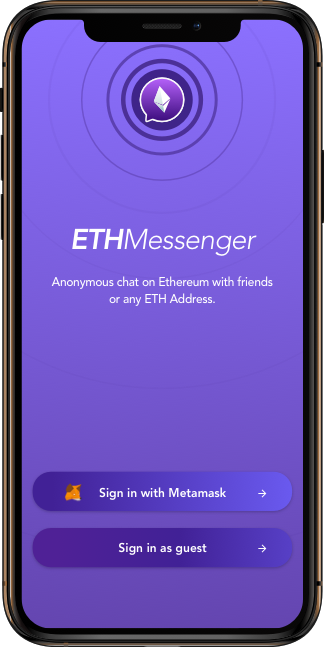
When I came onto the project, the app already had an existing architecture but no clear users. The founders had interviewed numerous parties to ask about potential use cases and came back with many fragmented, long-tail answers.
Thus, I implemented a rigorous screening rubric for the ideal end user / early adoptor customer segment to discover the persona(s) who would use this app at high volume. I also helped clarify who are the ideal partners through which the team can develop channels to large pools of the end user.
 Objective
To find an early adopter and high-volume use cases for a semi-anonymous, ethereum-address to ethereum-address chat feature.
To find partners who would integrate the chat app.
 My Role
25% UX Researcher | 25% Product Strategist | 50% Product Designer
Customer discovery, high-fidelity prototyping, rapid iterations with user feedback
 Success metrics
 Context
12 Customer interview calls --> 20 Customer interviews at ETHDenver 2019 --> 5 Partner pitch calls
 Who is the early adopter?
As it was unclear who would need to use this messaging app at high volume, we decided to list all possible segments and evaluate them according to an "early adopter rubric". Narrowing our list down to 2 high-potential persona, we then conducted 20 customer discovery interviews at the ETHDenver conference. We eliminated the community organizer as a persona, since they are happy with current tools and don't seem to have a highly painful problem. However, in the process we discovered that traders specializing in NFT (Non-fungible token) trades currently have no way of reaching out to a stranger to initiate a potential trade.
As getting the data to validate the approach requires real usage data, it became clear that the next step was to get partners with a high-volume of active users to integrate ETHMessenger so we can gather more usage data.
Partner call approach:
This prototype was produced to introduce the idea of an in-game chat for Dapper, the producer of Cryptokitties. The features we wanted to highlight were to showcase the benefits to the dApp developer, mainly:
The partners resonated with the idea of having an in-app engagement driver. They requested that we focus on the trading use case and to consider a 1/3-screen full-height integration instead of the intercom-like design pattern.
For future direction, I designed a mobile experience to demonstrate the same functionality could be portable, as 83% of Cryptokitties users demonstrate cross-platform usage.
The advantage of being a mobile experience is that users are much more willing to engage with chat here, versus on desktop. The idea is that once a user has an impression of ETHMessenger in the context of the partner brand, they would continue the engagement with both ETHMessenger and the partner brand in the chat. The chat then acts as a channel to pull users back into engaging with Cryptokitties.
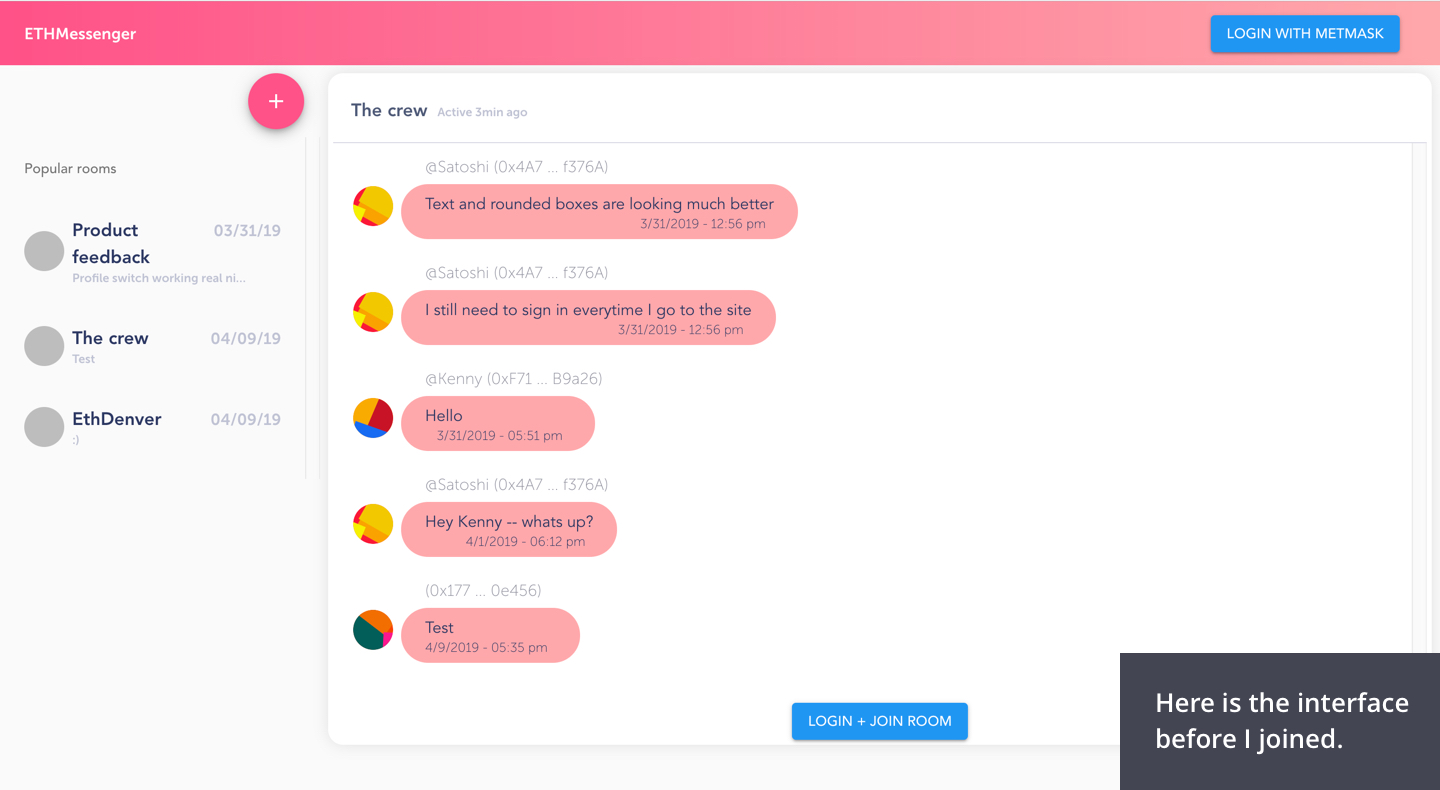
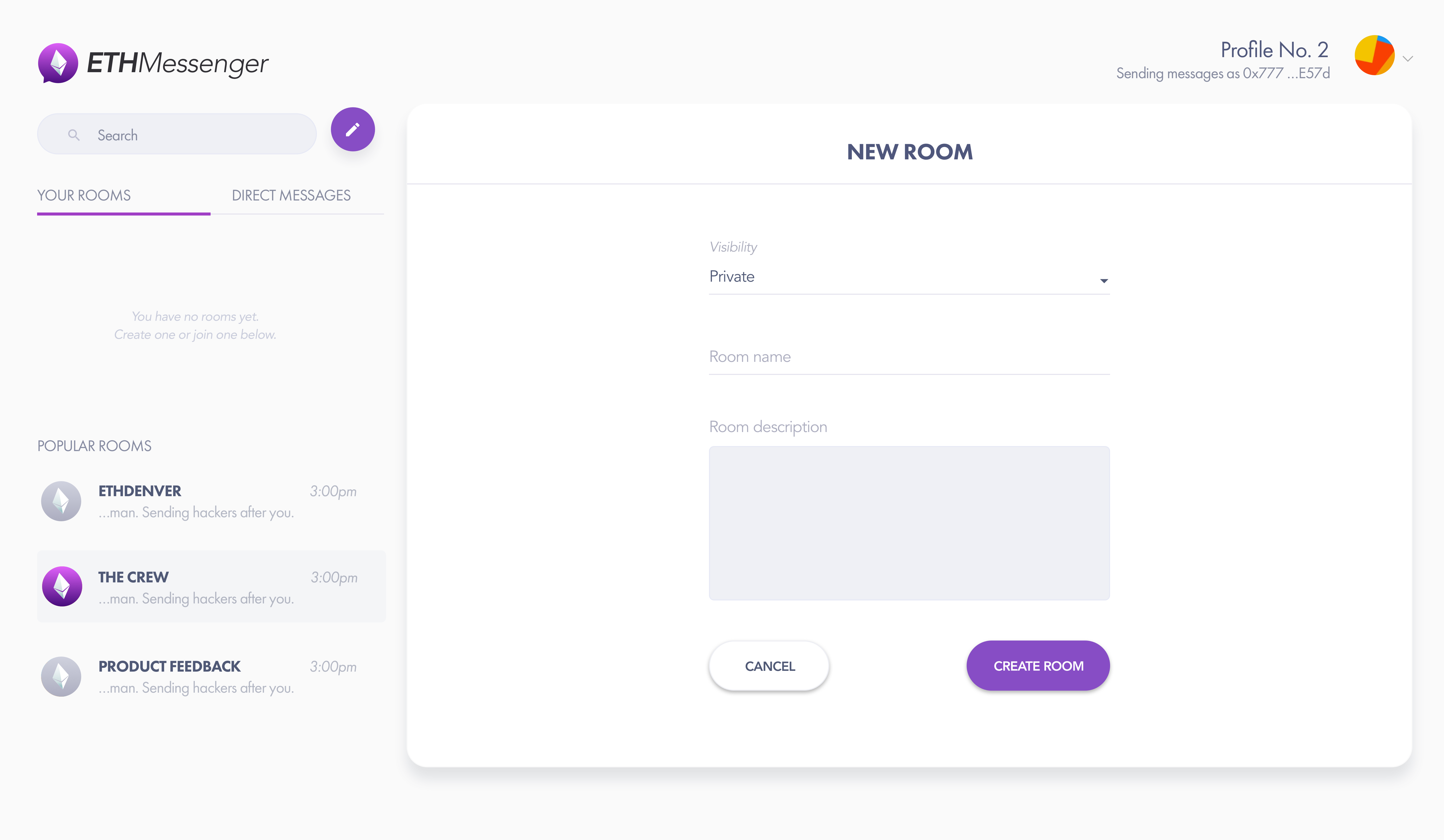
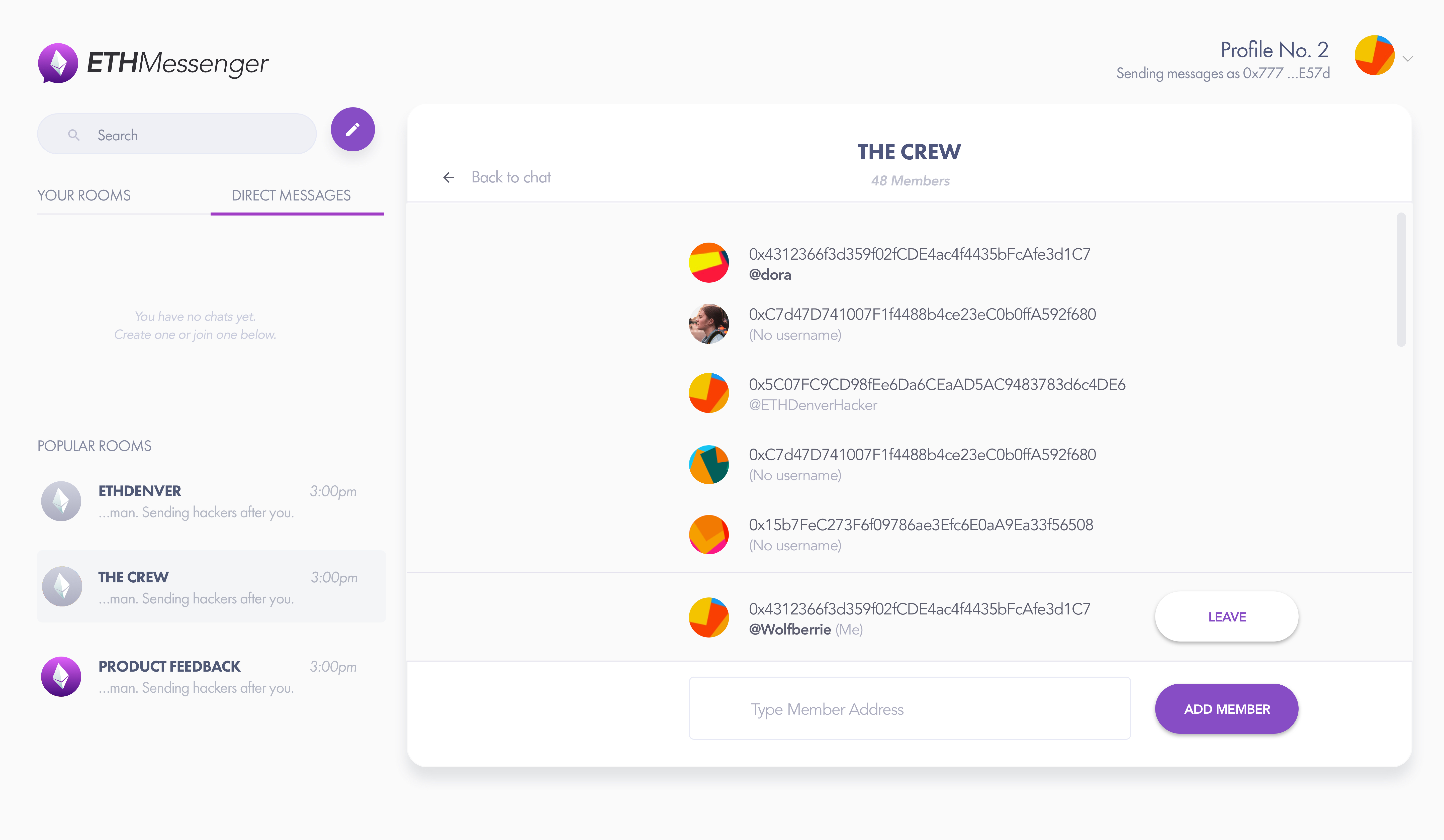
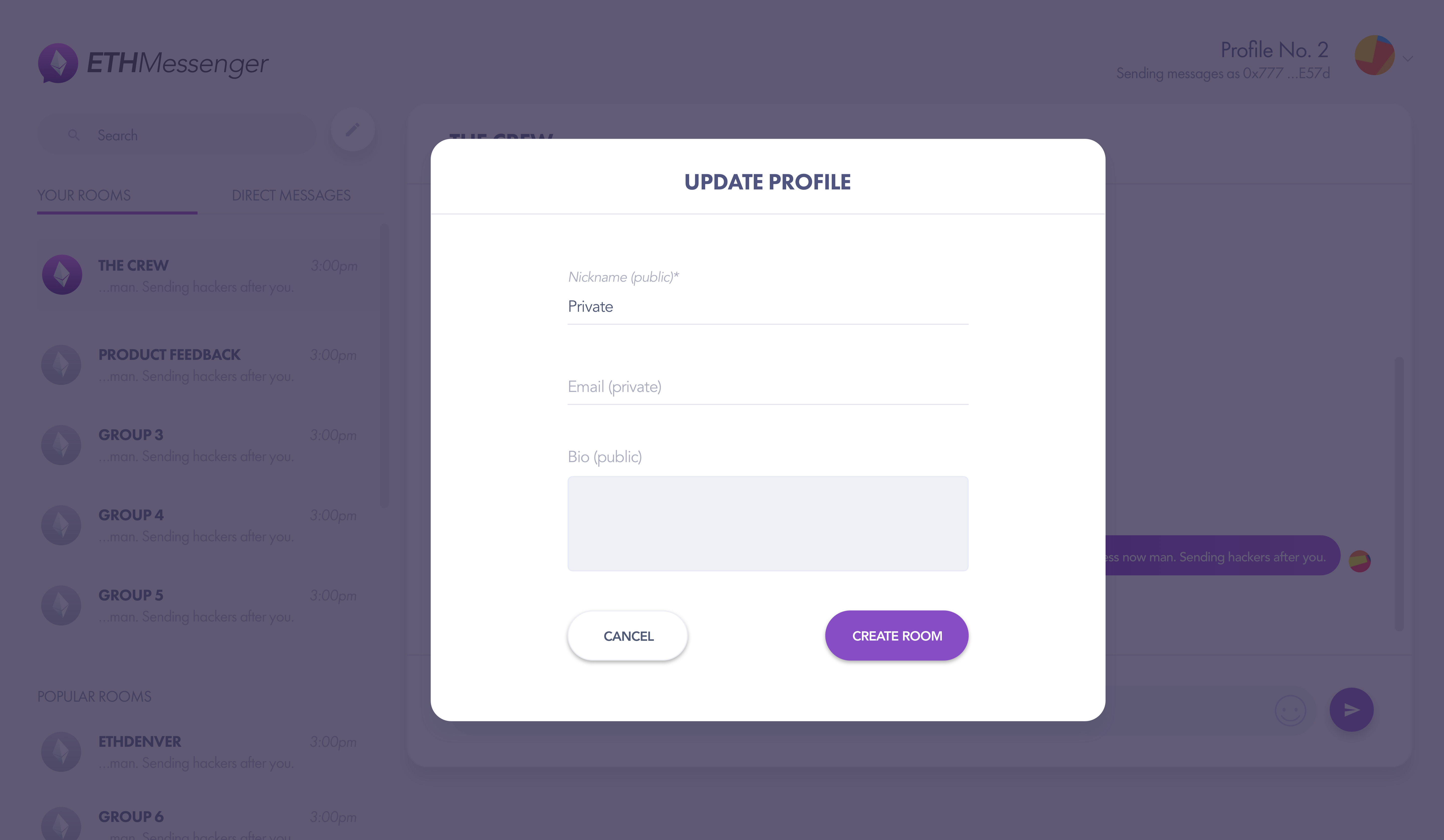
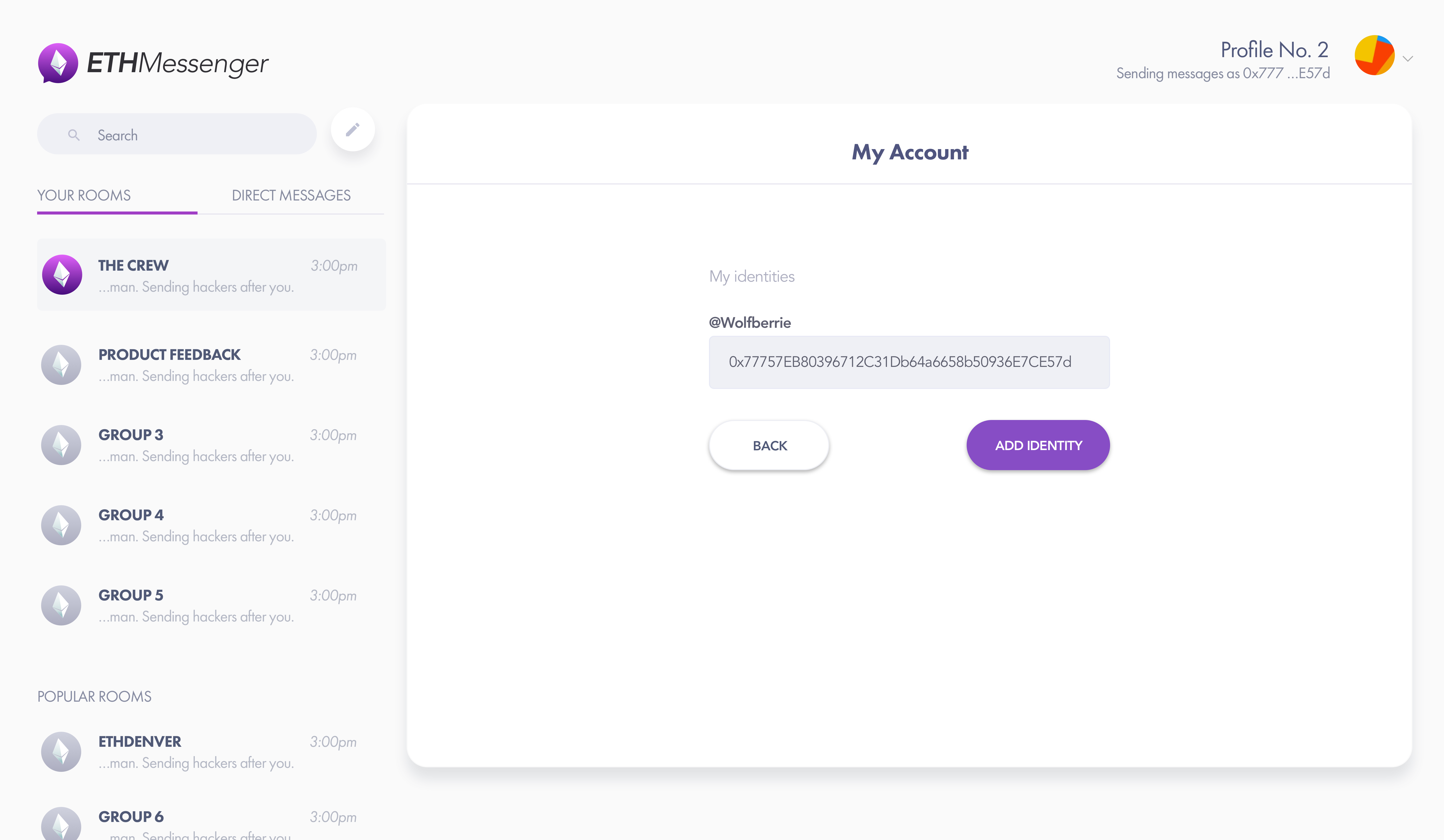
The redesign of the desktop app itself followed the constraint that it should minimize engineering rearchitecture.
To note:
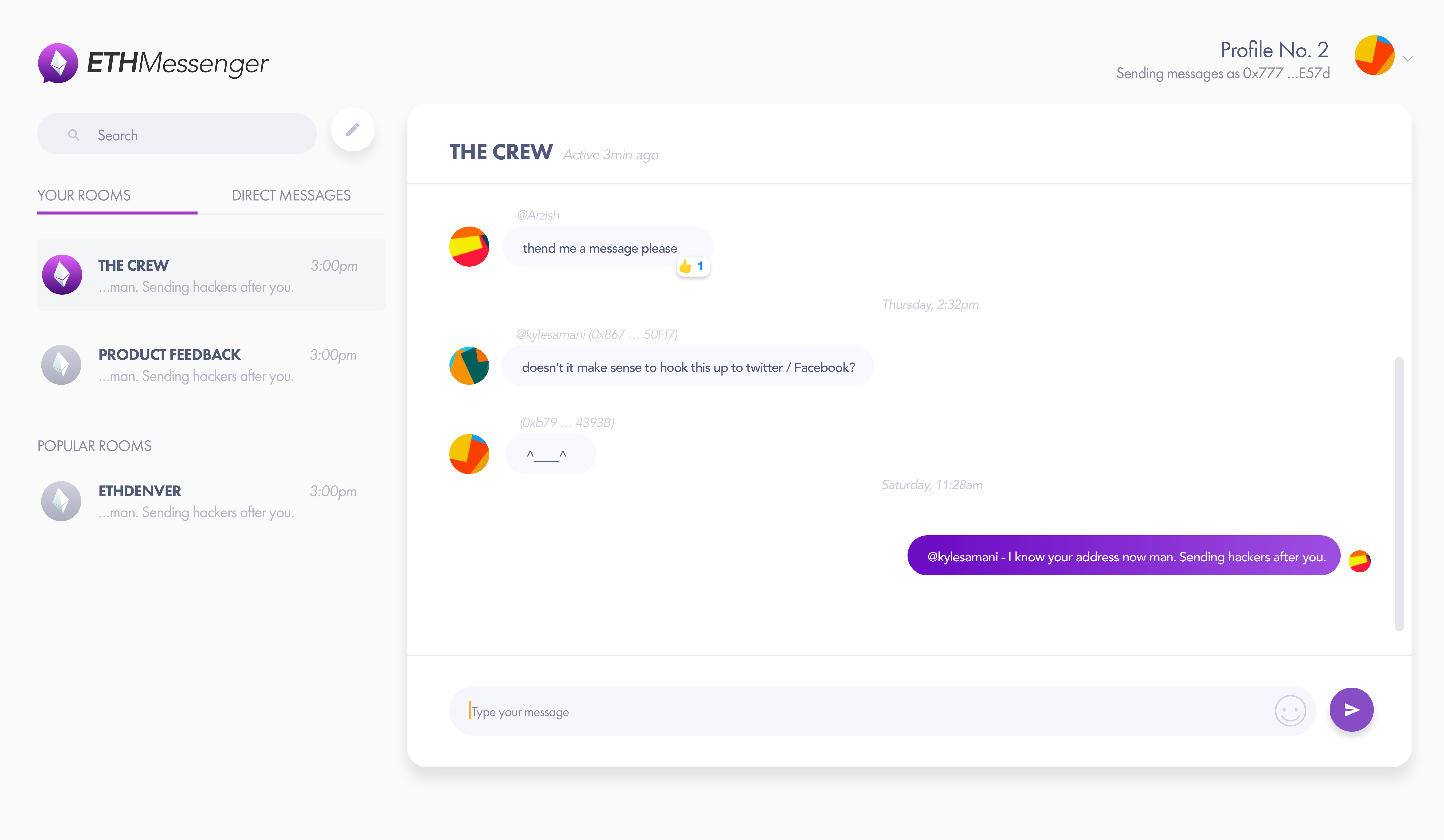
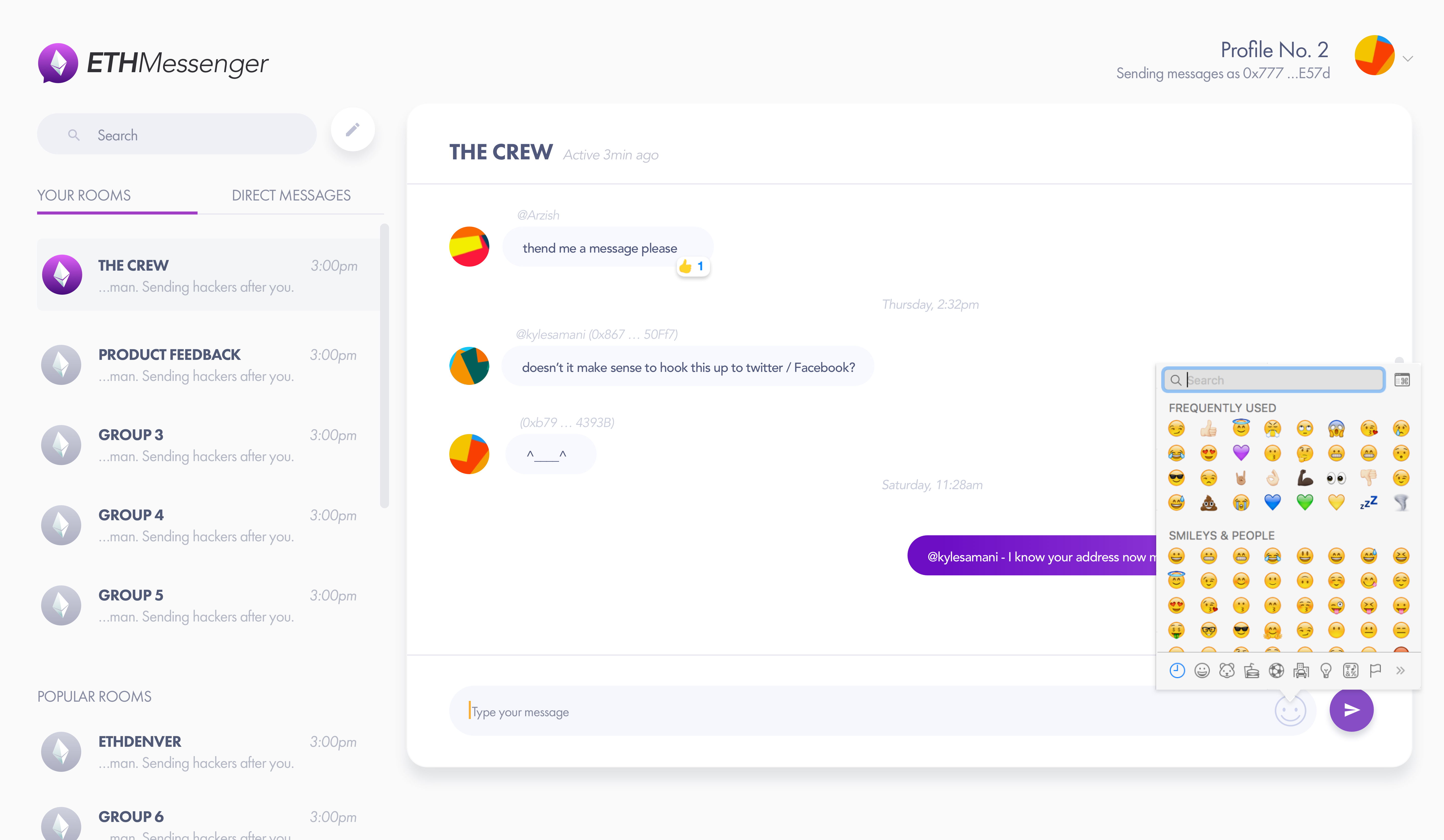
ETHMessenger is a classic case of building too early. This resulted in the team's need to retro-fit a pre-built product for an unvalidated market segment. Although we were able to achieve some exciting results with these initial partnerships, I advised the founders to go back to the drawing board and validate the market more rigorously before entering back into the solutions-finding space. I believe there is still a lot of room to explore market potential outside of the crypto-native audience where a communication protocol could add a lot of value.